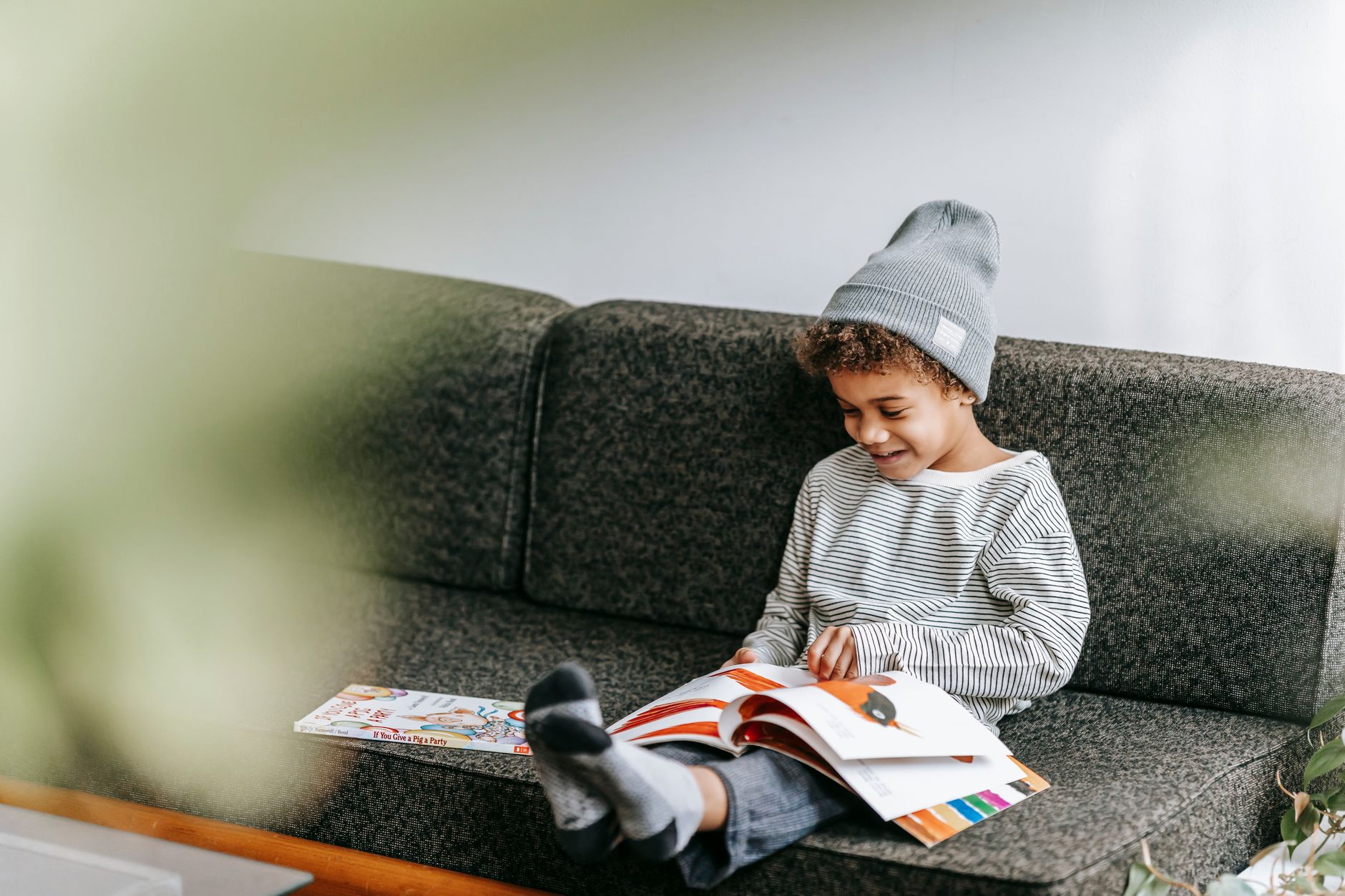
Unlocking a Love of Reading in Your Child
In the previous post, we explored the benefits of reading. Reading improves mental, emotional, and physical well-being. And, for children, reading regularly significantly improves their academic performance in school. However, just because you know something is good for you, doesn’t mean you’re going to do it. I know broccoli is better for me than chocolate, yet, I don’t reach for the broccoli when I’m in the mood for a snack. This post focuses on tools to develop an at-home reading habit that will make reading feel more like chocolate than broccoli.
Creating a Reading Habit
Note: As an Amazon Associate I earn from qualifying purchases. However, I only recommend things that I have personally used and loved.
If you or your child have never been regular readers, establishing a reading habit may feel daunting. My suggestion to an adult who wants to build a reading habit is to find the type of book that you like, and instead of doom scrolling before bed, read for 10 minutes, 1 chapter, or 30 minutes. You get to determine how, when, and where you read. You can also try an audiobook in your car, or on a walk. I personally have a hard time following a story on audio, so I usually listen to nonfiction audiobooks. That way, if I miss something, I won’t get too lost.
The best way to build the habit is to just start. You don’t need to wait until the first of the month, year, or week. It helps to keep track of how frequently you stick to your habit, so consider finding some way to track your reading. You can log your habit in an app, a journal, or on a note on your phone. I recently listened to an audiobook that talked about making a pact with yourself to commit to something. Once you make a pact – and maybe share it with others – you are more likely to follow through. Your pact can be as simple as, “I will read 10 pages every night before I go to sleep for the next 30 days.” You don’t have to get complicated, just commit. Once you’ve found type of books you enjoy, and have committed the time, you should be good to go.
It’s a bit tougher for a child to establish a new reading habit, especially if reading doesn’t come easy. First, there are so many activities and entertainment options competing with reading. Whether your child plays sports, video games, or watches online videos, there is always something vying for their attention. If your child is an early or struggling reader, it can feel like a punishment to have to sit down to read. They put so much effort into decoding the text, that they don’t get the chance to get lost in the story. How can you spark reading joy?

Don’t treat reading as a punishment.
If you are frustrated that your child has been playing video games all afternoon, pointing it out and sending them to their room to read sets up reading as a punishment. Instead, schedule reading time into their day.
When my son had to track his reading on a reading log for his teacher, I had him read in the car on the way to school. He could knock out his forced reading in the car, then he and I read something fun together later. If your child can’t read in a moving vehicle, encourage reading before school. My kids are usually ready 10-15 minutes before we leave. That would be a perfect time to read. If your family is rushing in the morning, maybe some quiet time after dinner fits the bill. They could even read in the bathtub. The idea is to make reading part of their routine, not something they are forced to do.
Model the behavior by reading your own books.
If you aren’t already a reader, reading alongside your child can encourage them to become a reader. You don’t have to read to them. You can read your own book. When my kids were younger, we’d have “family reading time” in the late afternoon on weekends. We all read our own books together in the living room.
It reminded me of my childhood, when we would all hang out in the living room doing a quiet activity on a Sunday afternoon. I always read the comics from the newspaper, then a book. When my family travels, we all read independently before lights out. When my kids were younger, I would read in the evening while they watched Paw Patrol or Duck Tales for the thousandth time. Seeing me reading normalized reading as a hobby, not a chore. I also feel like it helps them to see mom as a real person with real interests, not just the person who does all the things for everyone else.
Be a “book house”
I was showing a student a picture of my dog, who happened to be lounging in front of a bookshelf. My student was shocked by how many books we had. He asked if I live in a library. I wish!
Just about every surface in my home has a reading material on top of it. We love books, and have a lot of books. My kids don’t have stuffed animals in their bed, they have books. I rarely buy myself a physical book because we already have so many, but I’m always happy to buy my kids a book.
You don’t have to spend a ton of money on books to become a “book house.” If everyone has a library book or two, your house is filled with books. You can also take a book from a Free Lending Library around town, or buy used books from the Library book sale (where I buy all the books for my students), or a thrift store. It doesn’t have to cost a lot to be a “book house,” but having easy access to books makes it more likely that your kids will pick up a book.
Take turns reading pages or paragraphs.
If your child is an early or struggling reader, having to sit and read can feel like torture. In this case, you will want to read with them, not to them. I used to alternate pages when my kids were in kindergarten and first grade. I would have them read a page (or paragraph), then I would read a page. I would also pause and talk about what we read to ensure they are following the actual story, and not just reading the words on the page. If you truly don’t have time to read together, you can get the audiobook version and have them follow along. The library has a ton of audiobooks for free. They can be played on the Libby app from a phone or tablet.
Taking turns ensures that your child is following the story, and it helps improve their reading fluency. Reading aloud improves fluency, and listening to an adult model how to read aloud helps them learn skills like pacing, and expression.
Make reading fun.
They have already learned that reading isn’t a punishment, now make it fun. Reading doesn’t have to be confined to a desk or couch. Let them read with a flashlight in bed, or extend their bedtime by a few minutes to allow them to read before bed. Encourage them to read outside, or to read out loud to their pet or stuffed animals. Adding novelty takes it from being one more “to do,” to something to look forward to. My students LOVE when I let them read in the beanbag chairs instead of at their desks. The novelty makes it fun!
If you can’t make the environment tempting, you can make the activity special by having special “reading snacks,” or gamify reading by competing over who can read the most pages, or finish a chapter first. Sometimes, when I introduced a new sound or spelling pattern to my students, I challenged them to find an example of that pattern in their reading. I also compete with my students to see whether they can read more books than Ms. Kat. Last school year, I read 24 books (I don’t count audiobooks to make it fair), and one of my students beat me by reading 31 books in the seven months that we worked together! This year, one of my students is already beating me by two books – I need to catch up!
Let them choose what they read.
Don’t limit what your kid reads, within reason of course. As I tell my own kids and students, “any reading is good reading.” Let them read the graphic novel (comic book), or the same book over, and over again. If they’re struggling to pick something to read, help them find the right fit. Do they love the “Captain Underpants” show on Netflix? They’ll definitely love the books. Do they love “Dog Man?” Let them read all of the “Dog Man” books. You don’t have to buy them. The library has them.
Some kids prefer nonfiction to fiction. Let them read the book about the different types of dinosaurs or trains. The goal is to get them reading. The more they read, the stronger their literacy skills become. The stronger their literacy skills become, the easier it is to read. When it isn’t a chore, they’ll be much more likely to view it as a form of entertainment, not punishment.
You can also challenge them to read books that are movies, then watch the movies together. They’ll naturally compare the two, and usually find the book was better. Did you know that comparing a book to film is actually a common core standard for literacy?
Pick books that they can read independently.
This one is tricky. I just stated that they should get to choose their reading materials. Unfortunately, sometimes their interests don’t align with their abilities. In order for them to successfully read a book independently, they need to be able to read the majority of the words on the page. Some teachers call it the five finger rule. Basically, have your child open a page in the book they want to read. For every word that they are unable to read, or don’t understand, they hold up one finger. If they get to the bottom of the page and have more than five fingers up, the book is too challenging for them. If they have zero or one finger up, the book may be too easy.
A book that is too challenging will result in frustration, or they’ll just fake read. However, since the goal is to get them interested in books, consider reading the challenging books to them. If they really want to hear the story, read it to them, and they can have a different independent reading book just for them. In third grade, my son really wanted to read the Harry Potter books because his friend was reading them. Unfortunately, he was a struggling reader at the time. Instead of telling him no, I read him the entire Harry Potter book series to him, but he read his own books independently. I ended up having to do it all over again for my younger son.
Track reading, but don’t track reading.
What? Unless your child’s school requires a reading log, you don’t need to force them to read every day for a set amount of time daily. However, they should read every day, preferably for more than five minutes. How do you get them to read every day, but make it seem like it was their idea?
It can be fun to track progress. Maybe instead of a traditional reading log, use my free reading log with the happy/sad faces, or create a star chart or habit tracker. This way, they have a visual reminder of how much they read, but don’t make it high pressure. You can have a fun competition and track your reading as well. Whoever reads the most at the end of the week gets to choose dessert.
Another way to track reading is to list and rate books. I started doing this during the pandemic in a pretty little notebook. I tried online sites like Goodreads, but it didn’t work for me. I would never remember to enter the book on the website.
The first year of my notebook tracking, I wrote the book title, and gave it a rating (1-5 stars). Since I read so much, it was hard to remember what a book was about. My friends all know that I read a lot, so I am always getting requests for book recommendations. I couldn’t remember what I liked about a book, or whether that friend would like that book. I now write a little sentence or two about the book so that I can remember what it was about. My son noticed me updating my notebook, and quietly started keeping his own book journal in an old composition book.
Reward them for reading.
For some kids, bribery is the best way to instill a habit. Come up with a reward system for their reading habit to motivate them, if that’s something that works for your family. I had a student whose dad gave him money for every chapter book he read. Not only did he read more than 20 books in the seven months I worked with him, but his reading level improved significantly! Sometimes, bribery works.
Hopefully, these tips help your family on your reading journey. I’d love to hear how it goes!
If you need book suggestions, check out this post for kindergarten books, this post for first grade books, and this post for books for you!





Leave a Reply