
If you have a child who is new to reading, you may have heard the term decodable reader or decodable book. If you have a new reader and haven’t heard of decodable readers, you need to know about them! What is a decodable reader?
Simply put, it is text that an early reader can sound out using their phonemic (phonics) knowledge. Children are explicitly taught the letter sounds, then read simple texts that only use the sounds taught to them. No guessing, no using a picture for cues. They literally use their phonemic knowledge to decode each word. Of course, sometimes, the texts include sight words (also known as high frequency words) for clarity.
What makes decodable texts different from non-decodable (leveled) texts?
Decodable texts are texts that your child can sound out once they have learned letter sounds. They can look at a text like, “a cat sat,” and be able to sound out every word in the text without the support of a picture. Most childrens books aren’t written using decodable texts. As a result, your child will either need support reading words that don’t follow specific spelling and sound patterns, or they will guess at words.
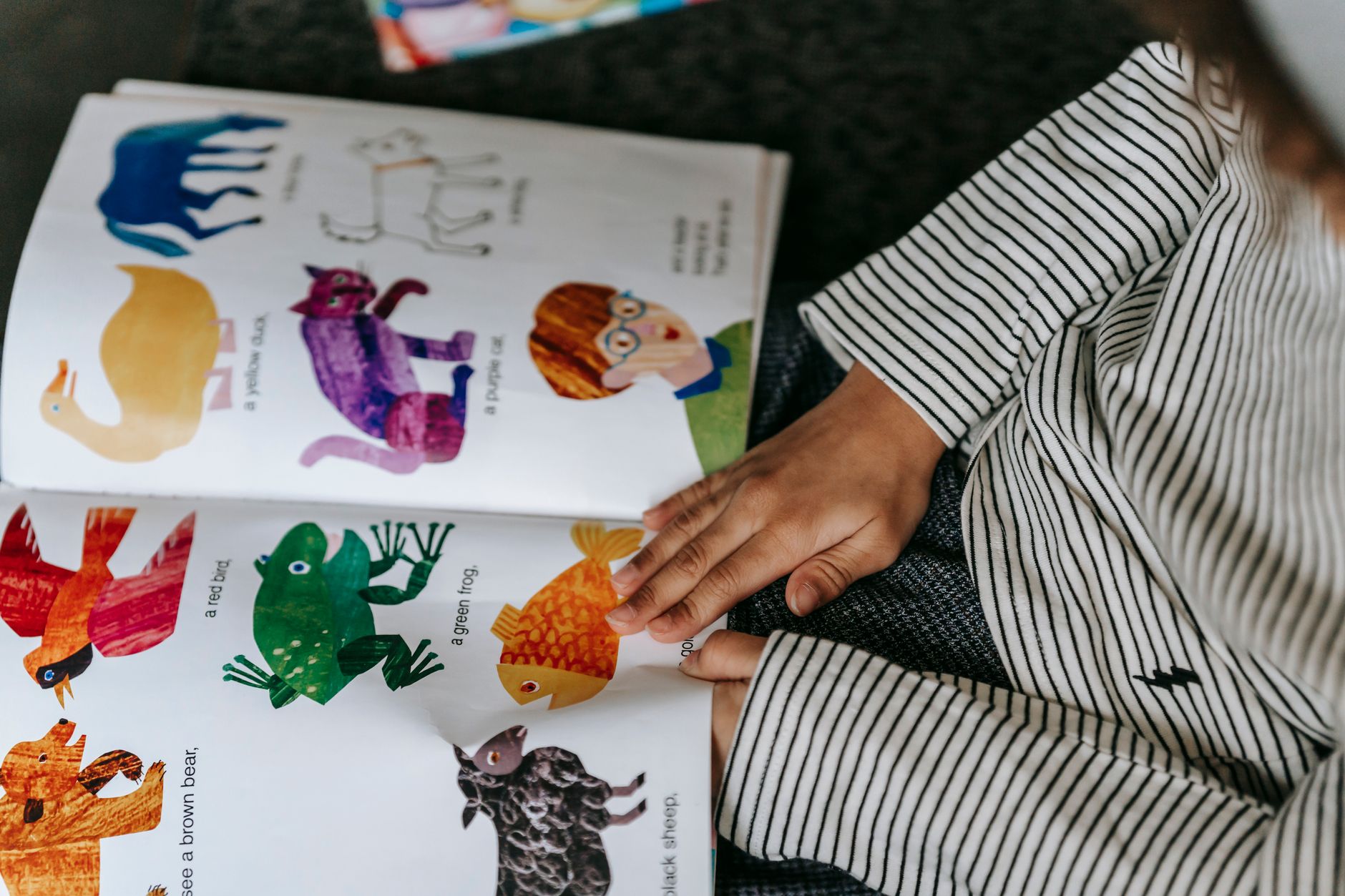
Usually, early readers have pictures, making it easier for new readers to guess words, or whole sentences. Additionally, some kids have a really good memory, and are able to memorize words. They may even memorize entire sentences. The problem with guessing words, or using pictures for cues is that eventually, your child will read books that don’t have pictures. If they haven’t developed proper decoding skills, they will struggle to read more challenging texts.
My sons both had their favorite picture books fully memorized, and could pretend to read the entire book to us. We knew they couldn’t possibly be reading the book, but others were amazed that our 3-4 year olds could “read.” It took a long time before I realized that my older son needed reading intervention because he had so many words memorized.
When a child reads a decodable text that is at their proper level, they should be able to decode, or sound out, every single word in the text. If the text has sight words, or high frequency words, they should have already been explicitly taught those words so that they are not guessing words. Decodable texts help them master the skills they’ve already been taught.

What’s Wrong with Guessing Words, or Using Pictures, to Help with Reading?
If your child is guessing words, or has words memorized, it can cause reading challenges as they move to more difficult texts. Texts in kindergarten through third grade include pictures, and simple sentences. However, once your child moves to more complex texts, there will be fewer pictures, and more multisyllabic words. They will also encounter unfamiliar words, and words that follow irregular spelling patterns. It is best to encourage them to sound out words from the beginning, so that they are adept at using their own decoding skills, rather than guesswork.
Of course, the English language is tricky, and up to 50% of words aren’t fully decodable. However, between 34-37% of words that aren’t fully decodable follow patterns, so once the pattern is learned, they become decodable. If your child is trying to guess, or use context clues, they will struggle as they encounter words that they are unfamiliar with, or that lack context.
How Kids Learn to Read
Learning to read isn’t a fully linear process, however, it is based on mastering certain foundational literacy skills, before moving on to others. The first skill is learning the letters of the alphabet, and their primary sounds. For example, in the case of vowels, we teach short vowel sounds prior to the long vowel sound.
Long vowel sounds are made up of supporting letters, so it requires more cognitive ability to determine whether a word is using a short or long vowel. For example, “mat” is different from “mate.” The new reader needs to understand that the “a” sound is long in “mate,” due to the “bossy” or “silent” “e” at the end of the word.
But what about long vowel sounds that come from other helper letters? A new reader must learn that “Sid,” “side,” and “sigh,” are all different words, and side and sigh have the same long “I” sound, but different spelling patterns. It gets complicated, which is why we don’t teach short and long vowels together. We also don’t teach all of the vowel patterns at once. We scaffold how we teach reading in order to reduce confusion.
Decodable texts allow early readers to focus on one skill at a time, and master that skill. Then, they can move to the next skill. So, if your child has only learned the short a – or is struggling with short a – having them practice reading a decodable text with just that vowel sound will help them master it before moving forward. It will improve their reading fluency, and overall confidence in their reading.
Whether your child is a new reader, or a struggling reader, it will benefit them greatly to use decodable readers for their reading practice. In our reading intervention program, we call the decodable readers their “weights” that they use to build their reading muscle. There is still a place for picture books, and more exciting texts, but decodable texts help build up their reading muscles.
If you’re struggling to find decodable texts, check out my products section. I have decodable texts that focus on one vowel at a time, and general short vowel decodable texts that practice all short vowels together, but build gradually in difficulty. You can also find practice printable phonics worksheets on my Etsy store.






Leave a Reply